Skip to content
LOS ANGELES COUNTY · CALIF.

Commercial fire protection in Long Beach, CA

West Coast Fire Systems is a commercial fire protection and life safety contractor headquartered in Long Beach, California. This is our home city, not a pin on a coverage map. We inspect, test, and repair fire alarms, sprinkler systems, fire pumps, standpipes, fire extinguishers, and emergency exit lighting across the city’s commercial stock: Ocean Boulevard office towers, port-adjacent warehouses, medical office buildings, and multi-tenant retail. The fire authority here — the authority having jurisdiction, or AHJ — is the Long Beach Fire Department, which enforces the California Fire Code as locally amended in Municipal Code Chapter 18.48. We document every system to that standard and file reports the way LBFD expects to receive them.

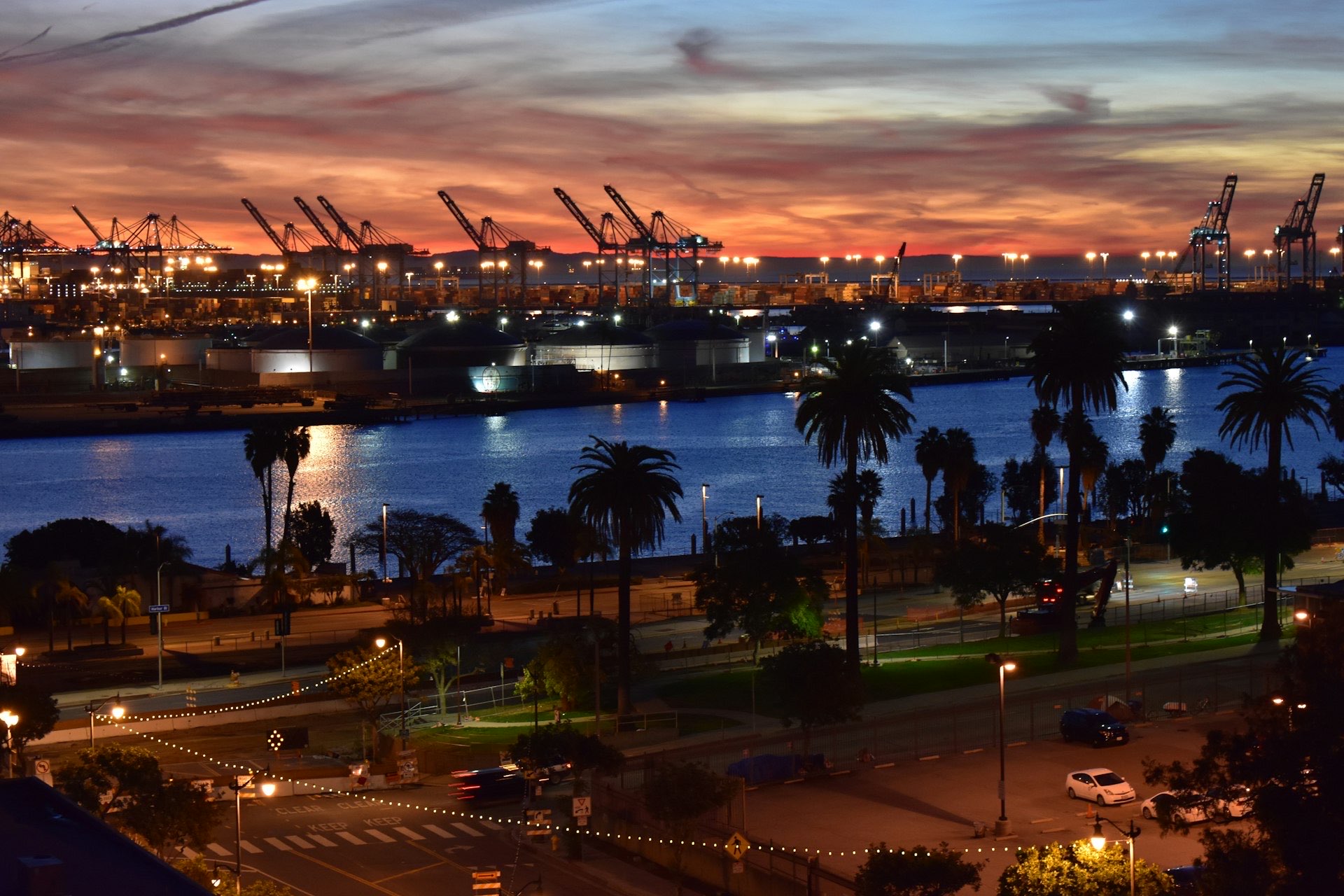
Container cranes and palm trees silhouetted against an ember-orange sunset over the Los Angeles–Long Beach harbor

Fire code compliance under the Long Beach Fire Department

Long Beach runs its own fire department. Commercial buildings here answer to the Long Beach Fire Department’s Fire Prevention Bureau, not Los Angeles County Fire. The Bureau’s Code Enforcement Section inspects most commercial occupancies annually, and the Bureau issues the permits covering hazardous materials storage and other regulated activities. The rulebook is the current California Fire Code (2025 edition), adopted with local amendments as Chapter 18.48 of the Long Beach Municipal Code, sitting on top of California Code of Regulations Title 19 — the state rules that set the required test intervals for fire alarms, sprinklers, extinguishers, and emergency lighting statewide.

Long Beach also tells you exactly where your paperwork goes. LBFD directs fire protection contractors to file inspection, testing, and maintenance (ITM) reports through The Compliance Engine, the Brycer-run third-party reporting portal — which means every test we run on your building, and every deficiency we note, is visible to the Fire Prevention Bureau. That transparency favors owners who fix findings quickly. Our 4-Tier Deficiency Priority System is built for exactly this environment: Priority 1 items are corrected or protected immediately, Priority 2 items are repaired within 30 days, and the record LBFD sees shows a closed loop instead of an open violation.

Two more Long Beach specifics worth knowing. The Bureau’s High-Rise Section separately inspects every high-rise in the city, so tower owners deal with a dedicated inspection team rather than a generalist walk-through. And LBFD serves as the Long Beach Certified Unified Program Agency (CUPA), the CalEPA-designated agency for hazardous materials programs — relevant to any port-adjacent warehouse or industrial tenant storing regulated materials. For owners, compliance in Long Beach means current ITM records on file in The Compliance Engine, deficiencies documented and closed, and permits in order before the annual inspection, not after. That is the record our Insurance Documentation Packet assembles in one place.

What Long Beach buildings need from a fire protection contractor

The industrial stock around the Port of Long Beach — Terminal Island, the Harbor District, and the warehouse corridor along the 710 — carries the heaviest fire protection load in the city. High-piled storage drives dense sprinkler demand, which means fire pumps that need weekly or monthly churn tests and an annual flow test under NFPA 25, private hydrants that NFPA 25 puts on an annual flow-and-flush cycle, underground fire service mains due for a flow test every five years, and backflow preventers on fire lines that the water purveyor expects certified annually. Add hazardous materials permits through the Long Beach CUPA, and these buildings justify one contractor holding the entire ITM calendar instead of four vendors holding pieces of it.

Downtown is a different portfolio. The Ocean Boulevard high-rise corridor holds office and residential towers that LBFD’s High-Rise Section inspects on its own track, and towers run on pressurized systems: fire pumps, standpipes with five-year flow tests, and sprinkler risers due for the 5-year cert — the five-year internal pipe inspection and system certification required under NFPA 25 and Title 19. North of downtown, the medical campuses anchored by Long Beach Medical Center and St. Mary Medical Center are ringed by medical office buildings and clinics where annual fire door inspections under NFPA 80 and monthly exit-lighting checks decide between a clean file and a re-inspection. The same logic applies around Cal State Long Beach: the campus itself answers to the State Fire Marshal, but the private student housing and retail across the street answer to LBFD.

DISPATCH · LONG BEACH HQ

Dispatch comes from our Long Beach headquarters — for this city, the trucks start inside the city limits. The 714-465-8801 line is answered by a person 24/7, every day of the year, and it is the same number for a scheduled annual test and a 2 a.m. impaired-sprinkler call. We will not quote response-time minutes on a web page; traffic on the 710 does not read marketing copy. What we can state plainly: Long Beach is home base, emergency repairs dispatch from here, and there is no closer market for us to serve.

Long Beach fire compliance questions

Who is the fire authority (AHJ) in Long Beach, California?

The Long Beach Fire Department is the AHJ for commercial property in Long Beach — the city runs its own department and does not contract with Los Angeles County Fire. Within LBFD, the Fire Prevention Bureau handles code enforcement: its Code Enforcement Section performs annual inspections of commercial occupancies, a dedicated High-Rise Section inspects every high-rise in the city, and the department serves as the Long Beach CUPA for hazardous materials programs. The code being enforced is the California Fire Code with local amendments in Municipal Code Chapter 18.48. When your contractor’s reports and your building records line up with what that Bureau expects, annual inspections close without follow-up visits.

Do fire sprinkler and alarm test reports in Long Beach have to go through The Compliance Engine?

Yes — LBFD directs fire protection contractors to submit ITM reports through The Compliance Engine, the Brycer-run online portal the Fire Prevention Bureau uses to track test results and deficiencies. Practically, that means your test history is not a binder in a riser room; it is a live record the AHJ can query, and an unresolved deficiency stays visible until a corrected report is filed. We file through The Compliance Engine as standard practice, and our 4-Tier Deficiency Priority System closes Priority 1 and Priority 2 items on a documented timeline so the record LBFD sees shows resolution, not backlog.

How often do fire sprinkler systems need to be tested in Long Beach?

Quarterly, semiannually, annually, and on a five-year cycle, following NFPA 25 as enforced through Title 19 and the Long Beach Fire Code. Mechanical waterflow alarm devices are tested quarterly; vane-type and pressure-switch waterflow devices and supervisory devices are tested semiannually; the annual inspection covers the full system, including a main drain test; and every five years the system needs the 5-year cert — an internal inspection of the piping and recertification of the system, with gauges tested or replaced. Buildings with fire pumps and standpipes add their own intervals, including weekly or monthly pump churn tests. Our NFPA-Aligned Inspection Frequency Schedule maps every one of these dates for your specific building, so nothing surfaces for the first time during an LBFD inspection.

Does Long Beach have a Reg 4 testing program like Los Angeles?

No. Reg 4 is the Los Angeles Fire Department’s Regulation 4 testing program, and it applies only inside LA City limits. In Long Beach, the same underlying work — NFPA 25 and NFPA 72 testing at Title 19 intervals — is documented through ITM reports filed with LBFD via The Compliance Engine rather than Reg 4 test certificates. For managers holding buildings in both cities, the distinction matters at budget time: the test scope is similar, but the filing systems, forms, and follow-up mechanics differ, and a vendor has to run both correctly. We work across both jurisdictions and keep the paperwork native to each.

Who does fire pump testing for warehouses near the Port of Long Beach?

West Coast Fire Systems performs fire pump testing for port-adjacent industrial buildings, dispatched from our headquarters in Long Beach. NFPA 25 requires an annual flow test measuring pump performance at churn, 100%, and 150% of rated capacity, plus weekly churn tests for diesel pumps and monthly for electric. For a high-piled storage warehouse off the 710, the pump is the system — the sprinkler density calculations assume it delivers, and insurers commonly ask for the annual test curve at renewal. Documented compliance tends to help at underwriting, though outcomes vary by carrier and policy. Our Insurance Documentation Packet puts the pump curves, ITM records, and deficiency history in one place your broker can actually use.

Inspect · Test · Repair · Install · 24/7 Response

Put your Long Beach property on the program.

A free compliance assessment scores your building and maps every system to its required inspection cycle.

714-465-8801
Schedule an Inspection

We respond within one business day — emergencies, immediately.

Call 24/7714-465-8801Schedule an Inspection